Stay in Your Lane
Anika Hedstrom | Sep 4, 2020
MICHAEL PHELPS and South Africa’s Chad le Clos had an intense rivalry. In 2012, le Clos took home the gold medal in the 200-meter butterfly. In 2016, they met again in the finals of the same event. A photographer captured the moment when Phelps was intent on winning gold, while le Clos seemed intent on watching Phelps. How many times in life have we been more focused on what others were doing and how they’re doing it? How much more (fill in the blank) someone else is or how much more (fill in the blank) someone else has, causing us to lose our own focus and stumble? Research tells us that more than 10% of our daily thoughts are devoted to making comparisons of some kind. This is precisely why I despise those charts and spreadsheets showcasing how much you “should” have accumulated for retirement based on your age and income, or how much the majority of people have saved by some specified age. So what? So what if you don’t have the exact amount you “should” have by age 40? What good is it going to do to spend time and energy focused on why you don’t measure up to some arbitrary barometer of financial fitness? And what assumptions are used in determining the numbers to begin with? Does the chart account for the fact that you took two years out of the workforce to put yourself through graduate school? Or that your career has been non-linear? I doubt it. Instead, let’s take a cue from Michael Phelps. Stay in your own financial lane. What have you already accomplished? What can you do more of? I’m talking about micro-actions that compound over time, like investing in yourself. Take the $6,000 you had earmarked for your Roth IRA contribution. Why…
Read more » Going Soft
Anika Hedstrom | Dec 10, 2020
MORGAN HOUSEL’S NEW book, The Psychology of Money, covers a host of topics related to money and emotion. I was especially drawn to his notion that “how you behave is more important than what you know.” I’ve been a student of behavioral finance for some time and know this to be true academically—but it also made me think of my father, Ole. My father was born in 1948 into extreme poverty. His family of seven lived at times with no running water or electricity. They also shared an outhouse, which was not particularly warm in the cold Montana winters. My grandfather had dropped out of high school and worked on the railroad. My grandmother was a grocery store clerk. Would you believe me if I told you that Ole grew up to be better at investing than 85% of active mutual fund managers? In other words, better than professionals with fancy educations and privileged upbringings? That's the funny thing about finance. It’s taught—and largely regarded—as a hard science, incorporating a plethora of complex formulas, concepts, jargon and rules. But if this were truly the ticket to financial success, why would individual investors like Ole, with no training, background or connections, outperform experts? The answer: Because so much of financial success is actually related to behavior. That's exactly the premise of Housel's book. In it, he argues that financial success is less a hard science and more a soft skill. There were two soft skills that Ole possessed that set him up for financial freedom. Wealth is what you don’t see. Ole was both a sports enthusiast and a total nerd. During the work week, his attire would mainly consist of Clarks dress shoes, Wrangler pants, a belt—which often missed at least one belt loop—and a collared shirt. He was the…
Read more » Simple but Not Easy
Anika Hedstrom | Feb 20, 2018
WHEN I FIRST BEGAN investing 16 years ago, I threw a bunch of investments at a wall to see what would stick. Someone I respected encouraged me to invest in master limited partnerships, so I purchased a few companies. I had no real idea what an MLP was or did. Sure, I spent some time surfing the net. But that was about it. Fast forward one year to tax time. I had lost money and had no idea I had to file with the IRS for an extension, as I awaited the arrival of the Schedule K-1 tax forms from the companies. Why did I purchase them in the first place? This became the moment when my naiveté hit me. Clearly, I needed a plan, not a hodgepodge of investments. Since becoming a financial planner and working for a large registered investment advisor, I’ve had the privilege of interacting with numerous clients. Their questions and concerns, coupled with my time spent in financial planning and investment management, have changed my views in many ways. Today, these are four of my core beliefs: 1. Keep it simple. No one wants to review a 50-page financial plan. No one. Part of the creativity in financial planning is distilling a client’s goals down to what’s important and manageable. People are more responsive and successful tackling financial goals when the necessary steps are served up in smaller doses. 2. Don’t get sold. When we first meet clients, we see so many broken portfolios. Leveraged exchanged-traded funds (ETFs). Concentrated holdings. Expensive active funds. Variable annuities. We’ve yet to encounter a client who went knowingly into these products or who later had no regrets. In most instances, these purchases reflect a persuasive salesperson, rather than the investment’s inherent appeal. Take a recent innovation: inverse volatility ETFs. During…
Read more » Going Neutral
Anika Hedstrom | Jan 20, 2021
ONE OF THE KEY skills I quickly learned as a new parent: how to curb some of my emotions. Take last night. We were enjoying our normal bedtime routine, including bath time, bottles and a few favorite books. Then I was vomited all over. Being vomited on was just another evening with our 16-month-old twins. If you dial up or down your emotions too much in response, they have you. Dial them a bit too high, and soon you’re down an internet search vortex that has you fretting over all sorts of obscure diseases. Keep your dial too low and you aren’t paying enough attention. So how do you become a Goldilocks in this scenario—not too hot, not too cold, but just right? Trevor Moawad, a renowned mental conditioning expert and advisor to sports stars, preaches the power of neutral thinking. In other words, focus on the facts. Here are ours: She threw up. She needs another bath. Repeat bedtime routine, but this time give her water. The place stinks. Clean up after twins are asleep. What dials are you turning up too high? Which are you ignoring? For those who immediately thought about their investment portfolio, how can you take some of the emotion—the dials—out of it? How can you turn a wild financial year like 2020 into facts? Consider the following, all of which are reasons for optimism: The S&P 500 was up 18.4% in 2020, including reinvested dividends, despite a brutal bear market earlier in the year. For the first time in more than 20 years—and probably ever, but the data only go back two decades—all S&P 500 companies have at least one female board member. We know from numerous studies that companies with more diversity at senior levels are more profitable and make better decisions. Large…
Read more » Gold Dust
Anika Hedstrom | Oct 17, 2017
FOR THE FIRST TIME in my life, I’ve hired a housecleaner. It’s absolutely worth it—but embarrassing to admit, at least at first. I’ve always been a neat freak, demanding clean, organized and tasteful living quarters, so I’ve spent a good portion of my life cleaning and organizing. A lot. I have even declined an invitation to go boating and hiking because I was color-coding my books. Lame, I know. After purchasing our home, I realized something had to give. My frugality and can-do attitude had driven me to do it all, even toilets, at the expense of experiences. But now, there were endless projects, organized books to read and the outdoors of the Pacific Northwest to explore. On top of that, I was finally living in the city I had longed to live in, with my lovely husband, and doing work I was passionate about. My behavior needed to change. I let go of trying to keep the perfect house and outsourced it. Turns out I’m much happier. Researchers at Harvard wouldn’t be surprised. A recently released study suggests that spending money to save time can reduce stress and increase overall life satisfaction. Spending on material goods didn’t produce the same effect. Interestingly, although outsourcing tasks brings increased happiness, it isn’t that popular—even among the millionaires surveyed. When pressed as to why buying time wasn’t that popular, despite its benefits, lead author of the study and Harvard Business School professor Ashley Whillans believes it's due to our work ethic. Perhaps we value being busy or suffer guilt when we pay someone for tasks that are easy to do ourselves. A woman, whom I’ve had the pleasure of knowing for years, lives on a farm. For years, she would run around her house, complaining about the dust that accumulated due to…
Read more » Along Came Sheila
Anika Hedstrom | Nov 7, 2017
HAVING RECENTLY LOST several people, I was in a bit of a daze. Grief stopped me from doing some of the things that brought me incredible joy, like downhill skiing and whitewater kayaking. Enter Sheila. Being the Swede I am, I fell in love with Sheila—my gently used Volvo AWD V60 sedan. My attraction to Volvos included family nostalgia, safety and longevity. The dealer was a friend of my aunt, so I was able to negotiate a very reasonable price, while offloading an old car I was unable to sell on my own. Now, I had no excuse. Sheila took me up mountains, hauled my kayak plus gear, and handled like a dream with anything mother nature threw at us. She fostered a sense of confidence and independence I never would have expected from a car. I no longer hesitated to take off on last-minute road trips or adventures, sometimes by myself and sometimes with others. Fearless and confident, Sheila provided a gateway to nature, increasing my health and happiness. Sheila received impeccable care—regular spa days, proper nutrition, exercise and rest. Our companionship—nine years together and over 100,000 miles—was cut short by an accident. Volvos are incredibly safe. Thankfully, I wasn’t injured. Sheila, however, was totaled. My heart sank as she was hauled off. How was I ever going to replace her? Luckily, I had somewhat of a reprieve in my new husband’s trusty 2006 Toyota 4Runner. As much as it hurt, it didn’t make sense to own two vehicles that were all-wheel drive or four-wheel drive. I began searching for a practical four door sedan I could drive for several years. Test driving several vehicles helped to assess overall quality, fit and finish. Safety, reliability and total cost of ownership ranked high on my priorities. Coming out of the financial…
Read more »
 Adam M. Grossman is the founder of Mayport, a fixed-fee wealth management firm. Sign up for Adam's Daily Ideas email, follow him on X @AdamMGrossman and check out his earlier articles.
 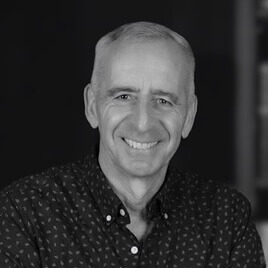 After spending more than two decades building a successful landscaping business with his twin brother Nicholas, Andrew Clements retired in 2015 with a new appreciation for what matters most. Born in England, his essays draw on a life that has included growing up in England and Bangladesh, entrepreneurship, caregiving, family loss and travel. A regular HumbleDollar contributor, he enjoys tellingstories that remind readers life’s richest lessons often have little to do with money. Andrew is the older brother of HumbleDollar founder Jonathan Clements, whose life and legacy have inspired some of his most personal writing. He lives in Florida with his husband, Joey.



The $5,000 Thought Experiment
Mark Crothers | Sep 10, 2026
Growing Up In A Big House
DAN SMITH | Sep 9, 2026
Flipping the Script on Asset Allocation?
Mark Crothers | Sep 18, 2026
When $2000 Isn’t Worth the Hassle
Mark Crothers | Sep 16, 2026
Structuring Bonds
ArticleAdam M. Grossman | Sep 19, 2026
The Jonathan I Found: Through Others’ Eyes
ArticleAndrew Clements | Sep 19, 2026
I will still take the dividends
R Quinn | Sep 12, 2026
My Favorite Room
DAN SMITH | Sep 17, 2026
Target Maturity Bond Funds
DAN SMITH | Sep 18, 2026
Financial Choices
ArticleAdam M. Grossman | Sep 12, 2026
- Looking to make charitable gifts? Because the standard deduction is now so high, fewer taxpayers are able to itemize deductions, and that can limit the tax benefit of donations. But there’s still a way to gain a tax benefit: If you have appreciated stocks in a taxable account, you can donate them to a donor-advised fund. That would allow you to sidestep the capital gains tax that would otherwise be due if you sold those stocks. Many donor-advised funds have no minimums, making this an easy choice, in my view.
- If you believe your estate will top the estate tax threshold (about $15 million per person at the federal level, but much lower in certain states), then I would be sure to use the annual exclusion (currently $19,000 per donor and per recipient) to make incremental gifts to your heirs. That's because this annual exclusion is in addition to the lifetime exclusion and doesn’t carry over from year to year.
Note that these gifts don't have to be made in cash if the recipients aren't yet in a position to receive them. As alternatives, you could make contributions to a 529 account or to a trust for their benefit, and these contributions would count toward the annual exclusion.What would you do if you received this text from your child as I did this morning?
R Quinn | Sep 16, 2026
A Wedding Too Far
Mark Crothers | Sep 7, 2026