FREE NEWSLETTER

WHEN MY YOUNGER brother Jonathan died, I thought I knew who he was.
After all, we had shared a childhood in England, years together at boarding school, family adventures in Bangladesh, and more than six decades as brothers. I knew the journalist the world admired, the devoted husband and father, and the man whose words quietly helped millions of readers live richer lives, not simply financially, but personally as well.
I was wrong.
Over the past several months, I’ve been searching for Jonathan’s beginnings. I thought I was looking for old articles, forgotten photographs and the names of people who had influenced his career. Instead, something unexpected happened. Former classmates, editors, colleagues, friends and readers began sharing their own Jonathan. One remembered a trusted reporter who never misrepresented his intentions. Another remembered a laugh that never disappeared, even in the face of death. His children remembered a father whose greatest gift wasn’t advice, but confidence.
Piece by piece, they gave me back my brother.
Not a different Jonathan.
A fuller one.
There was a Jonathan his readers and sources knew that I had never fully appreciated. He wasn’t afraid to ask difficult questions, but he asked them honestly, respectfully and never with an agenda. Dina Isola, who dealt with Jonathan professionally for many years, remembered that his reputation for fairness and honesty meant people trusted him enough to agree to interviews even when the subject matter was difficult.
Financial adviser Dan Danford remembered another quality. Jonathan held strong opinions, but he was never condescending or antagonistic toward those who saw things differently. Dan described him as open to genuine discussion, willing to listen as well as challenge.
Bill Blase, a longtime media relations executive who worked with Jonathan, saw yet another side of that same integrity: how seriously Jonathan took his responsibility to readers. Bill remembered him as meticulous about every word, statistic and investment he described. Jonathan once explained why: “We’re talking about real money here. So, the challenge is on getting it right, the first time. Not the second. This is not Monopoly.”
Jason Zweig, who became Jonathan’s friend in 1987, distilled all of this into a sentence I’ll never forget: “What you read is who he was.”
People trusted Jonathan because he was honest. They felt they knew him because he shared something of himself in every article he wrote. Jonathan wrote about personal finance, but his work was never just about money. It was about life, the choices we make and the experiences that ultimately matter most.
Bill Bernstein captured that beautifully when he said Jonathan wrote about “things that were far beyond the beat of a normal finance writer.” Perhaps Bill’s most revealing observation was also his shortest: “This man knows my life.” I suspect millions of readers felt exactly the same, not because Jonathan knew their individual circumstances, but because he understood something deeper about the hopes, fears and uncertainties we all share.
As I continued listening, I realized there was still more of Jonathan to discover. Through his children, Hannah and Henry, I met perhaps the most important Jonathan of all.
They didn’t remember a celebrated journalist or one of the world’s most respected financial writers. They remembered their dad.
Hannah recalled telling Jonathan how strong he had been throughout his illness. His response surprised her: “You would be the same if you were in my situation.” That simple reply revealed something profound. Jonathan seemed to see strength and confidence in other people long before they saw it in themselves. She also remembered her first day of kindergarten. Jonathan bent down and whispered, “We’ll pay for the best college you can get into, so go work hard.” It still makes me smile. It was vintage Jonathan: Encouraging, optimistic and quietly expressing his confidence in her future.
Henry’s memories were different. He remembered cups of tea, conversations and simply spending time together. They were ordinary moments that, taken together, painted the picture of an extraordinary father. Listening to both of them, I began to understand something I had never fully appreciated. Jonathan’s greatest legacy isn’t found only in the books he wrote or the articles he published. It lives on in the confidence he gave his children, the kindness they extend to others and the values they now carry forward.
Elaine knew another side of Jonathan, the husband who could make her laugh from the moment she came downstairs in the morning until the last conversation before they fell asleep. She remembered that, despite the wonderful vacations and fine restaurants they enjoyed, Jonathan often said he was happiest during quiet Sundays at home, sharing coffee and croissants, watching the squirrels and birds in the garden, and simply knowing the other was there. Even his financial instincts followed them home and on vacation. Whenever Elaine contemplated a purchase, Jonathan would ask, “Do you really need that?” or, when traveling, “Do you have room in your suitcase for that?” Sometimes she listened and sometimes she didn’t. But even now, she says, his voice still guides her when she’s tempted to buy something.
Most importantly, Elaine remembered Jonathan as a man of his word. When he said something, he meant it. He showed his love not through grand gestures, but through everyday acts of kindness and devotion. During his final year, as he quietly made sure Elaine and his children would be financially secure, she came to see those preparations for a future he knew he wouldn’t share as one of his greatest demonstrations of how much he loved them.
Then there was Jonathan’s humor. Cancer didn’t take that from him. If anything, it sharpened it. Even as his world grew smaller, his laughter never did. Jason Zweig remembered that Jonathan “laughed at death the same way he had laughed at everything else, with that unquenchable cackle of his.” Bill Bernstein saw the same remarkable spirit, recalling, “I never saw anyone who could laugh in the face of death the way he did.” Jonathan himself joked that he “hadn’t realized what a marvelous book marketing strategy a terminal diagnosis could be.” Those stories weren’t simply amusing. They revealed a man who refused to let illness decide who he would be.
Like many readers, I assumed Jonathan started HumbleDollar as a retirement hobby, a way to stay connected to writing after leaving The Wall Street Journal. I couldn’t have been more mistaken. HumbleDollar became another expression of the person he had always been. Jonathan devoted countless hours to writing, answering emails, interviewing readers, encouraging new writers and quietly building a community. Yet none of it ever seemed like an obligation. He genuinely enjoyed the conversations and the opportunity to help others.
What struck me most wasn’t the number of hours he worked, but how willingly he gave away his time. Whether responding to an email from a first-time reader or interviewing someone for an article, he made people feel they mattered. One reader told me Jonathan always replied with a handwritten thank you note after receiving a donation. Others remembered thoughtful emails, encouraging conversations and carefully edited articles that made them better writers.
Individually, those acts seem small. Together, they tell us exactly who Jonathan was.
The more I listened, the more I realized that Jonathan never forgot the people who had opened doors for him early in his career. Mrs. Dolezal helped him find his first reporting job. Leslie Leven patiently taught him the craft of journalism. Years later, Jonathan quietly became that person for countless others. I don’t think he mentored people simply because he was generous. I think he did it because he remembered.
In the weeks after Jonathan’s death, I thought I was collecting stories. I wasn’t. I was collecting pieces of a man. His readers showed me his integrity. His friends showed me his humanity. His children showed me his heart. His colleagues showed me his generosity.
No one person held the whole picture.
Not even me.
But together they did.
When Jonathan died, I thought I had lost the brother I knew. Instead, over the weeks that followed, I found myself discovering him all over again. The Jonathan I found wasn’t different from the brother I had always loved. Through the memories of everyone whose life he had touched, I simply came to know him more completely.
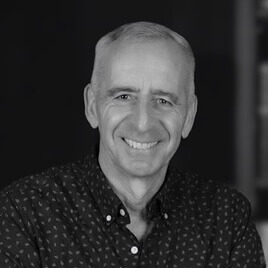
After spending more than two decades building a successful landscaping business with his twin brother Nicholas, Andrew Clements retired in 2015 with a new appreciation for what matters most. Born in England, his essays draw on a life that has included growing up in England and Bangladesh, entrepreneurship, caregiving, family loss and travel. A regular HumbleDollar contributor, he enjoys tellingstories that remind readers life’s richest lessons often have little to do with money. Andrew is the older brother of HumbleDollar founder Jonathan Clements, whose life and legacy have inspired some of his most personal writing. He lives in Florida with his husband, Joey.
Andrew, thank you for this rich word portrait on what must be a difficult anniversary for you.
I discovered HumbleDollar in 2020 when one of Richard Quinn’s articles about being trapped on a cruise ship during the early COVID days crossed my news feed, and it led me here. By early 2023, I had a modest list of possible topics I might like to write about, and I got up my nerve and reached out to Jonathan, who was as generous, welcoming, and encouraging as you and others describe. I didn’t know whether a professor with no expertise in finance had anything worth saying, but Jonathan made space for me, and the readers welcomed me, too.
I still miss his presence here, but thanks to you and others, he’ll never really be gone.