FREE NEWSLETTER

FOR MORE THAN 20 years, I worked as a personal trainer. Now I’m a financial advisor. On the surface, the two professions look nothing alike. Human behavior makes them far more similar than most people realize.
Years ago, one of my fitness clients joined Weight Watchers. At her intake meeting, she asked whether she should cut back on carrots because she’d heard they’re high in sugar. The specialist didn’t miss a beat. She smiled and said “No one ever comes to us because they eat too many carrots.”
The money version is just as true. People often fixate on a detail that barely moves the needle. I’ve watched people agonize over choosing this fund or that fund while saving just 3% of their pay. People follow the financial media frenzy for fear of missing out on the next big winner. This is akin to revamping your entire routine every time the latest weight loss trend hits the market.
On and Off the Wagon
Over my years as a trainer, I watched the same pattern again and again. People went on an aggressive diet, then off it. They started a workout program, then quit. They joined a gym, then rarely set foot in the door.
Plenty of others showed up consistently, but they simply went through the motions. They strolled on the treadmill while reading a magazine or watching TV. They lifted weights that never challenged them. Going through the motions beats going through no motions, but it rarely gets you the result you want.
Trainers have a metric for this. It’s called RPE, short for rate of perceived exertion. RPE is a scale used to measure how hard your body works during physical activity based on how you feel. I often asked my clients, “On a scale of one to 10, how hard did that feel?” A one is sitting on the couch, and a 10 is the absolute maximum effort you can handle.
Muscles, fitness and health only improve when they’re pushed past comfortable. It’s called overload. Someone who wants to lose 30 pounds needs both better eating habits and workouts hard enough to count. Cutting back on carrots is not the problem to solve.
Your Financial RPE
It didn’t take long to realize my financial planning clients were displaying similar behaviors. Some experienced a burst of energy to tackle important tasks. Then life got in the way, and the work landed on the back burner, half finished.
Others enthusiastically told me all about their early retirement dreams. The minimal effort they were putting in today wasn’t going to get them there.
Still others were on track but working at a perceived exertion of a 9 or 10 in their 40s and 50s. They saved so aggressively, or worked so much, that they were missing out on life. I applaud the effort, but it isn’t sustainable. I worry these clients will have regrets later in life. Are they missing out on valuable family time while the children are young? Are they working so much they’re neglecting taking care of themselves?
In both fitness and finance, you need to identify what you hope to achieve and make a plan to get there. You also need to reevaluate as the decades pass. What worked in your 30s is likely not the right strategy in your 50s. Every human body gets more complex and delicate with age, and your financial life does, too.
The Hard Lifts
In the gym, the exercises people avoid are usually the most important and effective ones. Sometimes that’s cardio. Sometimes it’s lunges. These exercises are uncomfortable, so people find reasons to skip them.
Money has its own hard lifts. The task you’re avoiding is likely the most important one on your list. You avoid it because it makes you uncomfortable and it’s hard to get started. It’s a 9 or 10 on the financial RPE scale.
I see high income earners in their 30s and 40s continue to increase their spending with each raise yet not increase the savings rate along with it. I see completing an estate plan as one of the most delayed, yet extremely important financial lifts we each need to address. First time parents are eager to open their first 529 plan and begin saving for college but life insurance? That can wait. Opening a college fund for an infant feels productive and gratifying. Facing mortality or making tough family decisions is stressful and overwhelming.
My training clients told me they didn’t have enough time. My financial planning clients tell me they don’t have enough time.
When will you have time to address your health? When will you have time to address your wealth? Every year you put off your health is a decision you may pay for dearly later in life. Every year you put off saving is a year compounding can’t work in your favor. It raises the risk you can’t support yourself financially or can’t live your later years the way you hope.
Check Your RPE
Here’s my challenge. Pick a financial goal you’re chasing, or a task that’s been sitting on your list for a while. Rate your effort honestly, from one to 10. Then ask whether that number matches the goal you set for yourself.
Health and wealth fuel each other. The money you accumulate is only enjoyable if you’re healthy and happy enough to use it. Ideally, it pays for more adventures than doctor bills.
What’s a reasonable financial RPE to strive for? Well, that depends on how financially fit you are. And that’s a topic for a future article.
In the meantime, eat your carrots. Lift the heavy thing. And check your financial RPE.
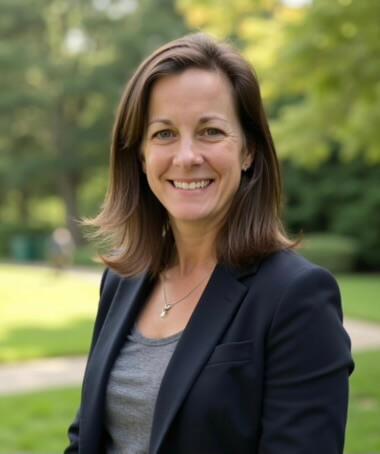 Annie Garland, CFP®, is a wealth advisor at WealthClarity in Lakewood, Colorado. She spent more than 20 years as a personal trainer before becoming a CFP® professional. She’s a proud mom of two daughters, a wife, and an avid mountain biker.

Annie, thanks for a great article.
I really like the concept of Rate of Perceived Exertion, and how it applies to so many parts of our lives – work, family, volunteering, education.
It also got me thinking about how different levels of RPE are appropriate at different phases of life. The work RPE that I was willing and able to sustain at one stage of life is certainly different to what I could do now.
Thank you for such a brilliant analogy. Wealth and Health go hand in hand. One is restricted or enhanced by the other of course.
I’ve read many decades ago it takes, consistency plus time to see lasting results.
Teaching folk what to do, and seeing them actually do the things of success is a noble, but so difficult task!
I’ve been an avid HumbleDollar reader for years and have learned so much from this community. It’s a true honor to have the opportunity to be a contributor. Thank you all for your thoughtful comments.
Great article! Hope to see more from you.
Annie, good job bringing two important topics together, health and finance! Your paragraph on carrots was especially enjoyable! Life is always better when things are in the proper perspective. Looking forward to hearing more from you. Bob
Great article Annie. At 80, I can assure you we need both exercise and wealth to get through retirement. Luckily, I noticed early somewhere in my 20’s, that LIFE BALANCE was the key, which you so nicely displayed in your article. Keep these articles coming.
Analogies, like narratives, capture and hold the reader’s interest. Your post succeeded throughout. Excellent — thank you! Looking forward to more from you.
Annie, thanks for an interesting article. I look forward to your next one on finding your financial RPE. I’m a big advocate of automating our financial lives to save and invest first, and live on what’s left.
Great advice, Annie, and great job drawing parallels between physical and financial fitness. Thanks!
Annie, great article full of hard truths, it’s easy to fool ourselves. I run racket sports training classes for seniors and have noticed a trend. The majority try and improve incrementally, then we have the two extremes. At one end we have those who put in little effort and give up because of no improvement and disillusionment, and at the other end are those who push too hard to become excellent players and fade because of overplaying, causing injuries.
I always suggest slow and steady is the answer, rather like the best way to build wealth. It beats vague promises to start someday or going extreme and damaging other parts of your life.
Great article on very important topics to those of us at an advanced age.
As for health and fitness we have doctors to consult and advise us toward a healthy path.
For financial assistance/ assessment how many have Financial Advisors? Many (most) especially those of the FIRE movement think DIY is a fine and achievable way to set a proper financial path. Really?
I wish more people / friends would seek help from professionals in the financial field ( not to diminish the excellent advice from Humble Dollar and other good sources) to assist with the best path to reach optimum financial health.
My husband and I manage our own money, but our grown children have no interest in finances. (I’ve tried to engage them, and I provided copies of Jonathan’s books.) They are high earners, who live well within their means. One, who was literally accumulating the unopened quarterly reports from her previous and current employers in a shopping bag, got a financial advisor a few years ago. He is pricey, but has intervened to prevent major sales during downturns. Her brother hired the same advisor last year when he changed jobs and relocated. The advisor provided extremely good advice during the transition.
Regular readers if HD I suspect have higher than average interest in money. For others, it simply is not and never will be a high priority. For those folks, a financial advisor is an expensive help, but well worth the cost.
No way am I paying an AUM fee. If I had started doing that when I retired I’d be out hundreds of thousands of dollars. Instead, my money has been quietly growing in low cost index funds. I set my asset allocation, I rebalance when I take my RMD, and I get a fee-for-service planner to run the numbers every five years.
Well said, but what are you going to do, if you die and your spouse has no Finance IQ like you do. At 80, I have taken care of all finances for 58 years with little to no outside help, no AUM. But, if I die first my wife will need help, so I plan to start now to get a competent advisor to steer my wife, after I pass. In this case I think it is the best of all, because RMD’s, Taxes, Trusts all change somewhat, when you go from MFJ to Single. My take, as it makes me feel comfortable for my wife and children.
I am single, so that issue doesn’t arise. In your case, finding an advisor your wife likes seems like a good idea. Meanwhile, you have benefited from not paying an AUM for 58 years….
Yes, really. DIY is a fine and achievable way to set a proper financial path. Most people, if they’re willing to consistently devote a moderate amount of effort, do not need a financial advisor and will be better off financially due to the fee savings. Also, the personal satisfaction from managing one’s finances is incredibly empowering.
I’m not sure that is true of “most people”.
The evidence (including the low average balance of 401k accounts) would suggest otherwise.
Just like the evidence of obesity and poor fitness in the US suggests “most people” probably would benefit from a relationship with a personal trainer.
some people need a personal trainer to help them establish good exercise form and habits, and some people need a financial trainer to help them establish good financial habits.
it may not need to be a life long relationship, but it’s pretty clear that a significant portion of our population is not really on the right path to either physical or financial health. I would not want to discourage them from seeking some assistance.
401k account balances alone are an incomplete measure of “average” retirement preparedness. However, I agree that lower median net worth among people in their 50s and 60s is concerning.
But to suggest that this is evidence people need financial advisors is invalid. There are real reasons retirement preparedness is low, and it has nothing to do with the choice between DIY personal finance or using an advisor – people who aren’t accumulating enough wealth because of inadequate income, inconsistent employment, limited retirement benefits, or competing financial obligations. Financial advice won’t solve these problems.
But the part of my comment you glossed over is, “if they’re willing to consistently devote a moderate amount of effort.” These people may have the financial capacity to save but aren’t making optimal decisions. They have the choice to first seek out information which is widely available on the Internet, such as sites like Humble Dollar.
I agree it is fine to seek professional help if you have tried to do something yourself and aren’t making progress, particularly if it is not an assets under management model, but instead a flat fee or hourly model that gets one on the right track. The greater point is that no one should assume a financial advisor is necessary.
My family managed their own money so I have followed in their footsteps . A few of my friends also manage their own money and we have all done very well over the past almost half century. We all were able to retire early . I think managing without an advisor depends on your general level of education (we are engineers, actuaries, economist etc) and being well read. I stay in touch with my doctor but I am well read in that field too. My doctors have told me that I am their best informed patient, and I am very healthy. I am nearly 70 so whatever the FIRE movement is advocating is not an interest of mine.
The people I know with advisors know enough to manage their finances themselves. Advisors appear to provide the confirmation people seek that they are on the right path and making the right choices. Knowing that I arrived at financial independence on my own has been immensely gratifying. That feeling, I imagine, would be lessened had advisors guided my path.
Thanks Annie for a strong motivational article.
Free Newsletter
Arrives weekly.